
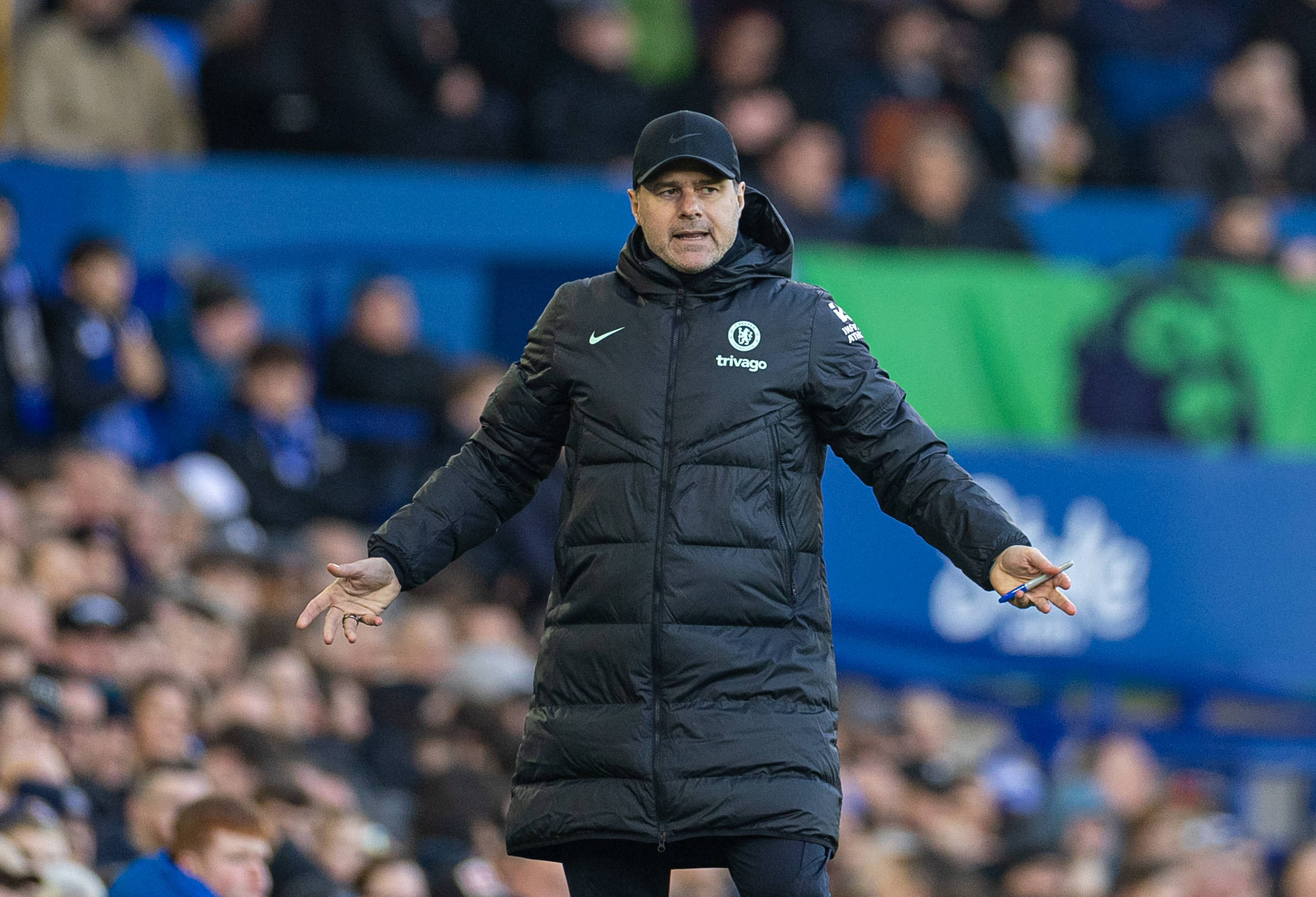
Chelsea’s Internal Power Struggle: The Departure of Mauricio Pochettino and its Aftermath
Chelsea Football Club has often been synonymous with dramatic turns of events, both on and off the pitch. The recent revelations, as reported by The Times, shed light on a profound internal struggle that has arisen in the aftermath of Mauricio Pochettino’s departure. What started as a difference in opinion regarding the Argentine’s future has evolved into a visible rift between the club’s key decision-makers. This blog unpacks the unfolding situation at Stamford Bridge, the impact on the club’s future, and what it means for Chelsea fans.
Pochettino’s Departure: The Tipping Point
It all began with Pochettino, a manager widely respected across European football, being shown the door after only ten months in charge, it was not an impulsive decision but one backed by an 18-page report authored by Paul Winstanley and Laurence Stewart, Chelsea’s sporting directors. The report laid out, in meticulous detail, why the former Argentina international was no longer the right man for the job.
While Clearlake Capital, who hold the majority stake in Chelsea, sided with their sporting directors, Todd Boehly attempted to veto the decision. Boehly, the figurehead of Chelsea’s ownership group, publicly backed Pochettino, offering him public displays of support and speaking highly of the team’s progress under his stewardship.

However, Boehly was eventually overruled. The persistent stance of Winstanley and Stewart, coupled with the strong backing from Clearlake, left him little room for manoeuvre. The final decision saw Pochettino replaced by Enzo Maresca in June. The departure of Pochettino, although handled professionally, was the match that lit the fuse on what has become a larger issue within the Chelsea hierarchy.
Power Struggle: Boehly vs Clearlake
The fallout from Pochettino’s departure has given rise to a significant power struggle between Boehly and Clearlake’s leading figures, Behdad Eghbali and José E Feliciano. While insiders insist there’s no “civil war” brewing, it is evident that a divergence of opinions on key decisions has caused tensions. Both parties are now seemingly willing to buy out the other for full control.
At present, control of Chelsea is shared between Boehly, Hansjörg Wyss, and Mark Walter, who hold the remaining shares, and Clearlake Capital, who boast a 61.5% majority. Despite Boehly’s substantial influence and his role as the public face of the ownership, Clearlake’s financial clout and their ability to block any sales give them the upper hand.
The friction between Boehly and Eghbali, now made public, adds to the instability surrounding the club. With fans and insiders alike growing concerned, talks between shareholders are expected in the coming weeks, with many predicting Clearlake will eventually buy out Boehly. If this comes to pass, it would mark a significant shift in Chelsea’s ownership dynamic, leaving Clearlake with full control of the club’s future.
The Stamford Bridge Conundrum
One of the more pressing issues facing Chelsea is the future of Stamford Bridge. The club’s 42,000-capacity stadium pales in comparison to the likes of Arsenal’s Emirates Stadium and Tottenham Hotspur Stadium, both of which exceed 60,000 seats. To close this gap in matchday revenue, Chelsea’s owners are committed to an upgrade. But even here, the cracks in the ownership’s unity are visible.

The dispute over the stadium’s redevelopment isn’t about whether it should happen, but rather who should be in charge of the project. Clearlake has called for independent expertise, appointing Jason Gannon as president and COO of Chelsea, leveraging his experience from managing the SoFi Stadium, home of the Los Angeles Rams. Architectural firm Populous, known for designing Tottenham’s state-of-the-art ground, has also been brought on board.
The question that remains unanswered is whether Stamford Bridge should be rebuilt on its current site or whether the club should consider a move to a new location, such as Earl’s Court. Both options carry significant implications — rebuilding on the current site could see Chelsea forced to play home games at an alternative venue, such as Wembley Stadium, for several years. While this disagreement is important, it pales in comparison to the wider issues facing Chelsea’s leadership.
The Consequences of a Divided Leadership
Todd Boehly’s initial approach as Chelsea’s owner saw him take a hands-on role in football decisions, even appointing himself as sporting director. However, after a disappointing campaign in which the club spent over £1 billion on new players but failed to secure a Champions League spot, his influence began to wane. Clearlake and their trusted sporting directors now hold significant power over footballing matters, but Boehly’s public support of Pochettino demonstrated his willingness to challenge the new structure.
One particular moment, highlighted in The Times, underscores the fracture between Boehly and Clearlake. After a 5-0 thrashing at the hands of Arsenal in April, Winstanley and Stewart decided it was time for Pochettino to go. Boehly, on the other hand, took the manager out for dinner and continued to praise his efforts, noting the team’s “beautiful football” and encouraging patience.

“Even the commentary has changed over the last 2½ games,” Boehly remarked. His optimism was apparent, even as others within the club saw the writing on the wall.
Ultimately, the decision to part ways with Pochettino may have been inevitable, but the internal disagreements it exposed have left Chelsea in a precarious position. With Clearlake and Boehly seemingly at an impasse, it remains to be seen how long this uneasy truce can last before one party is forced to step aside.
Our View – EPL Index Analysis
Chelsea supporters are right to be concerned about the growing divide between Boehly and Clearlake. At a time when the club needs to focus on rebuilding both on and off the pitch, internal power struggles only serve as distractions. The situation at Stamford Bridge is reminiscent of the turbulent days of Roman Abramovich’s reign, but without the singular vision that often led to success.
Fans may question whether Boehly’s continued involvement in football decisions is beneficial for the club. While he clearly cares about the team, his willingness to back Pochettino despite evidence to the contrary raises concerns about his judgement. The club’s future could be jeopardised if these power struggles continue, particularly with critical decisions like the Stamford Bridge redevelopment looming on the horizon.
Supporters are also likely to feel uneasy about the possibility of a complete Clearlake takeover. While their financial backing is undeniable, their commitment to long-term stability remains to be seen. A resolution must be found quickly, before the friction between the club’s leaders threatens to destabilise everything Chelsea has built.

