
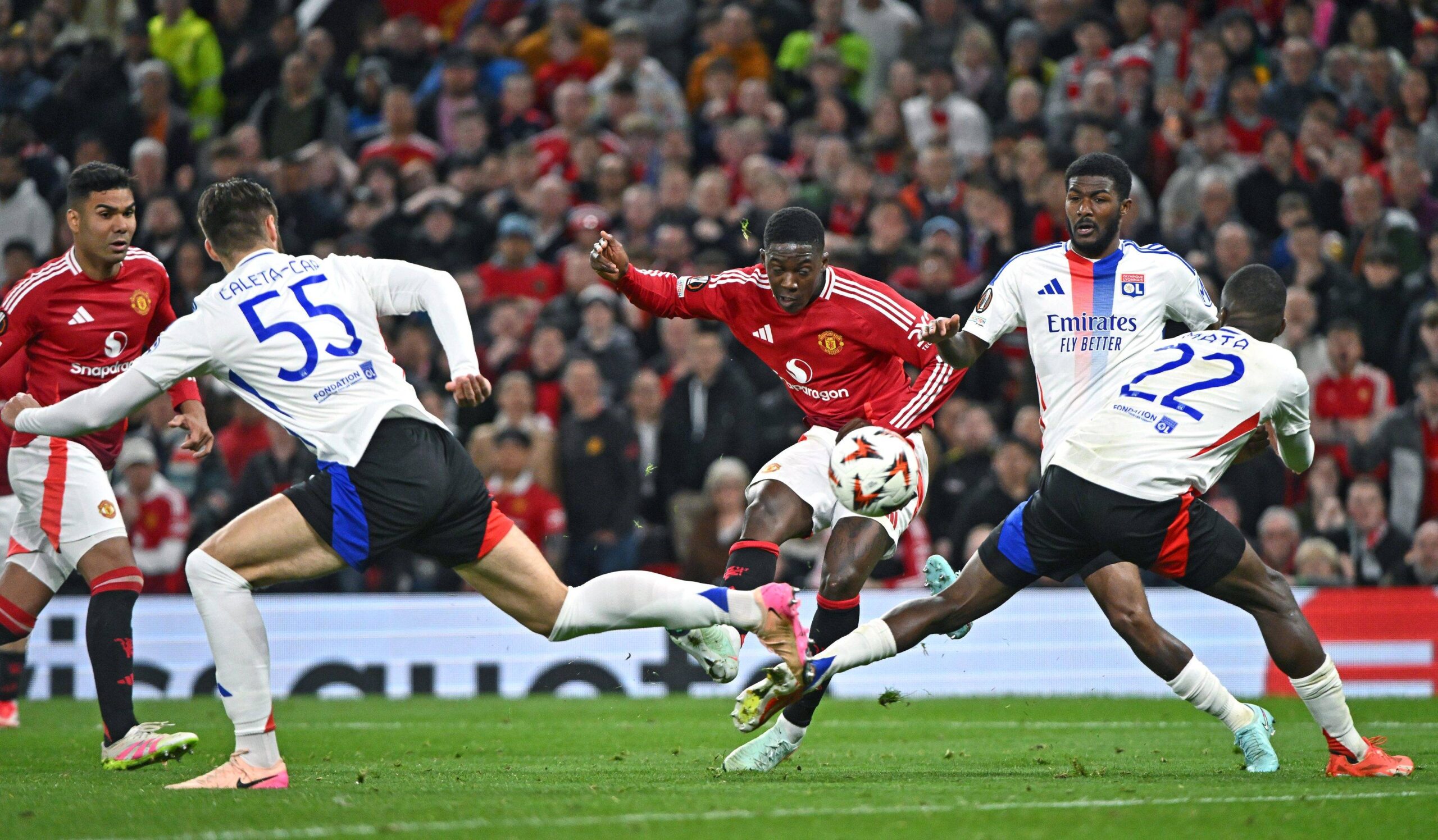
Manchester United is not only one of the biggest football clubs in the world, but also a club that has always impressed with its ability to adapt to changes in the game and tactics. From the era of Sir Alex Ferguson to the present day, the team has gone through many transformations, each reflecting changes in the game itself, tactical trends and even the demands of modern football. Over the decades, Manchester United has demonstrated flexibility in its approach to the game, from an attacking strategy to more balanced systems. This has allowed the club to remain at the top not only nationally but also internationally.
Manchester United did not always stay within the same style of play. Each new coach brought his own ideas, which influenced the overall direction of the tactics. It is important to note that the changes in tactics were also driven by changes in the squad, transfers and the demands of football itself, as the requirements for teams and strategy became more complex every year.It is also important to note that in the modern world, the popularity of clubs is influenced not only by their sporting success, but also by factors such as cooperation with various international partners. For example, the popularity of a zahraniční casino among fans and visitors can be a part of a broader strategy to attract new audiences and partners to increase the financial stability of the club.
In this article, we will take a closer look at how Manchester United’s style of play has changed, noting the biggest transformations, identifying the main tactical periods, and analysing the influence of each coach on the team. This will allow us to better understand why Manchester United has remained one of the most popular clubs in the world.
1. The beginning of an era: Sir Alex Ferguson and the classic Manchester United style of play
Transformation of tactics under Ferguson’s leadership
Sir Alex Ferguson, as Manchester United’s coach, was the true architect of the club’s greatness. Starting his career in 1986, he built his team on the basis of aggressive attacking football, which became the basis for numerous victories. During this period, the club developed a style that combined quick counter-attacks with strong defence.
- Tactical strategy: The main emphasis was on attacking football, which involved the use of flanks, quick counterattacks and continuous pressure on the opponent. Ferguson paid special attention to quick transitions from defence to attack, which allowed the team to dominate.
- Using the flanks: Players on the wings, such as Ryan Giggs, David Beckham and Chris Smalling, became an important part of this strategy, as they developed quick attacks and provided crosses into the penalty area.
Changing the game system
Ferguson regularly changed his tactical schemes depending on the opponents he was facing. His style of play was characterised by flexibility, which allowed the club to dominate various tournaments.
- 4-4-2: The basic formation during many successful seasons, allowing for a balanced line-up with two forwards and midfielders who could both defend and support the attack.
- 4-3-3: A more attacking system used by Ferguson to maximise the benefits of quick attacks and control in the centre of the pitch.
2. Post-Ferguson: The search for a new identity
Changing coaches and their impact on tactics
After the departure of Sir Alex Ferguson in 2013, Manchester United entered a period of searching for a new tactical identity. The club experienced instability as each new coach tried to implement their own ideas, but it did not always bring the desired results.
- David Moyes (2013-2014): Moyes tried to preserve much of what Ferguson had created, but, unable to adapt to the rapid changes in football, he was unable to achieve much success.
- Louis van Gaal (2014-2016): He brought in new tactics, focusing on ball control and building play through short passing. However, the results were mixed, and the club’s style of play became more cautious.
- Jose Mourinho (2016-2018): With an approach characterised by more cautious and structured football, Mourinho tried to restore stability. His team was characterised by strong defence and counter-attacks.
Ole Gunnar Sulcher’s search for modern tactics during his career
When Ole Gunnar Solskjaer became interim coach in 2018 and then officially took over the club, Manchester United returned to attacking tactics, but with modern football trends in mind.
- 4-2-3-1: The most common formation under Sulcher, which allowed to control the game in the centre of the pitch, with a focus on quick attacks with the help of wingers.
- The role of young stars: He emphasised the development of young players such as Marcus Rashford and Mason Greenwood, which gave the team additional speed and creativity in attack.
3. Tactics in the Ralph Rangnick era and beyond
Ralph Rangnick: new ideas for Manchester United
Ralph Rangnick became the club’s interim coach at the end of 2021. His influence on tactics has been significant, especially through the introduction of the principles of hybrid football, based on high pressure and quick transitions.
- Hybrid style: Rangnick tried to introduce more aggressiveness into the game by focusing on high pressing, where the team tries to intercept the ball as soon as possible after losing it.
- Balanced attack and defence: The key idea was to maximise the use of ball control with quick counterattacks.
4. Prospects for Manchester United’s tactics in the future
Finding a strategy for the future
With new changes in management and potential new coaches, Manchester United will likely continue to search for the perfect tactics for long-term success. The team will probably have to combine the best elements of attacking and defensive football, adapting to the demands of modern football.
- Young talent: It is important to continue to invest in the development of young players to ensure speed and technicality in the future.
- Technical flexibility: The team must be prepared to change tactics as football becomes more dynamic.
The most memorable matches of the club
1. The Champions League Final in 1999: Manchester United vs Bayern Munich
1.1 The legendary final in Barcelona
One of the most famous matches in Manchester United’s history is undoubtedly the 1999 Champions League final against Bayern Munich in Barcelona. This match has become a symbol not only for the club but also for the entire world of football. The match was considered one of the most dramatic in football history, as Manchester United, trailing 1-0 until the 90th minute, managed to pull out a 2-1 victory in extra time.
- Highlights of the match:
- Herbert Dyche’s goal at the start of the match put Bayern ahead.
- In the 90+1 minute, Teddy Sheringham levelled the score.
- In the 90+3 minute, Ole Gunnar Solskjaer scored the winning goal, giving Manchester United its first Champions League trophy since 1968.
This match was the culmination of an incredible season when the team won not only the Champions League, but also the Premier League and the FA Cup, achieving a historic treble – three titles in one season.
2. Winning the Champions League final in 2008: Manchester United vs Chelsea
2.1 The battle for the European title in Moscow
Another historic moment took place in 2008 when Manchester United met Chelsea in the Champions League final at the Luzhniki Stadium in Moscow. It was a tense match that was remembered for the dramatic development of events, as well as the incredible psychological pressure on the players.
- Highlights of the match:
- Cristiano Ronaldo’s goal at the start of the match put Manchester United ahead, but Frank Lampard levelled the score for Chelsea.
- After a 1-1 draw in regular time and extra time, the match was decided by penalties.
- Manchester United won the penalty shootout, winning 6-5.
This triumph was the club’s third Champions League title in history and a symbol of the team’s revival after several years without major European success.
3. Winning the Europa League final in 2017: Manchester United vs Ajax
3.1 Triumph after hard times
After a difficult period in the club’s history, when Manchester United experienced problems with form and stability, the 2016/17 season was an important one for the team to regain its position on the European stage. In the 2017 UEFA Europa League final, Manchester United met Ajax in Istanbul.
- Highlights of the match:
- In the first half, Zlatan Ibrahimovic and Paul Pogba put Manchester United 2-0 ahead.
- In the second half, Guido Carrillo scored another goal to give the team a 3-0 victory.
- This title was important not only for Manchester United, but also for Jose Mourinho, who won his second trophy as a coach.
This victory was also an important step for the club to return to the big European game after unhappy years.
4. Manchester United – Manchester City 6-1 derby (2011)
4.1 One of the most humiliating but memorable matches
If Manchester United has its great victories, it has also had its share of bitter defeats. One of the most memorable and humiliating defeats for the club was the derby against Manchester City in 2011. Alex Ferguson’s team lost to their neighbours with a score of 1-6 at their home stadium, Old Trafford.
- Highlights of the match:
- The initial header by star Edinson Cavani and the unpredictable look of Manchester United’s defence provided a huge advantage for Man City.
- The derby showed how much the situation in Manchester had changed, with Man City becoming the favourites and United dropping out of contention.
This match was a severe blow to the club’s self-determination, but it also served as the start of major changes in the team.
5. Cristiano Ronaldo’s return to Manchester United (2021)
5.1 The symbolic return of a legend
In 2021, Manchester United gained one of the most symbolic moments in its history – the return of Cristiano Ronaldo. This was not only an event for the club, but also an important milestone in the Portuguese footballer’s career.
- Highlights of the matches after his return:
- Ronaldo continued to demonstrate his high form, scoring important goals and confirming his status as one of the biggest stars in football.
- His first return to the pitch in the matches against Newcastle and Burnley was a huge event for the club’s fans.
This return was important not only for Manchester United, but for the football world as a whole, proving that the club is still capable of attracting the best players.
Conclusion.
Manchester United’s tactical evolution is a vivid reflection of how one of the world’s most successful football clubs has responded to changes in the game, transformations in football philosophy and the challenges of the times. From the dominance under Sir Alex Ferguson to the experimentation with different systems in the post-Ferguson era, each stage has been part of a profound process of adaptation.
Manchester United has proved that strategic flexibility is a key success factor in modern football. The club has gone through periods of crisis, revised its playing principles and sought the perfect balance between attack and defence. Despite the difficulties, the team has always strived to maintain its identity – assertive, bold and responsible play.
Now, in a period of searching for new tactical steel, Manchester United is on the verge of another transformation. The combination of innovative approaches, analytics and the development of young players gives hope for the revival of the club’s glorious traditions. Future success will depend on the team’s ability to synchronise the modern demands of the game with the rich heritage left by previous generations.
It is thanks to the constant improvement of its tactical model that Manchester United remains not only a world-class sports brand, but also an example of how history, strategy and innovation can be combined into a single winning concept.

