
Arsenal Women 2024/25: How a London Powerhouse Redefined the English Game
Season Snapshot: Silverware, Statistics and Statement Victories
A Campaign of Near-Perfection
Arsenal entered 2024/25 with momentum from their record-breaking League Cup triumph the previous spring. They finished second in the Women’s Super League (WSL), one point behind Chelsea, and reached the UEFA Women’s Champions League final—their first since 2007—after dispatching Bayern and Paris FC over two-legged ties.
The Londoners also posted the division’s best goal difference (+35) and conceded the fewest shots on target per match, underscoring a dominance that transcended the final table. The nadir—a 2-5 reverse at Aston Villa—proved an anomaly rather than a trend.
Managerial Hand-Off
Jonas Eidevall’s surprise exit in October created concern, yet interim coach Renée Slegers steadied the ship and was confirmed permanently in January. Under her, Arsenal averaged 2.6 points per game and upped their press-resistance by 12 %, according to Second Spectrum tracking.
Tactical Evolution: From Vertical Surge to Positional Control
Phasing in a Double-Pivot
Eidevall’s single-pivot 4-3-3 often left Lia Wälti isolated. Slegers introduced a double-pivot of Wälti and Kyra Cooney-Cross, giving full-backs licence to join the front line. The tactical tweak paid immediate dividends in December’s 5-0 derby win, played before 56,784 fans at the Emirates.
Mariona Caldentey’s False-10 Role
Summer signee Mariona Caldentey blurred the lines between striker and creator, finishing the league season on 19 goals and nine assists while ranking first for progressive passes per 90. Spanish media crowned her “la arquitecta de la Premier.”
Headline Makers: Players Who Powered the Surge
| Player | Key Metric | League Rank |
| Alessia Russo | 12 WSL goals | 3rd |
| Beth Mead | 0.46 xA/90 | 2nd |
| Emily Fox | 74 % duel success | 1st among FBs |
| Leah Williamson | 93 % pass accuracy | 1st among CBs |
Emily Fox’s seamless transition from NWSL added defensive bite, while Leah Williamson’s return from an ACL tear stabilised the build-out.
Crowds, Cash and Cultural Capital
The Emirates Effect
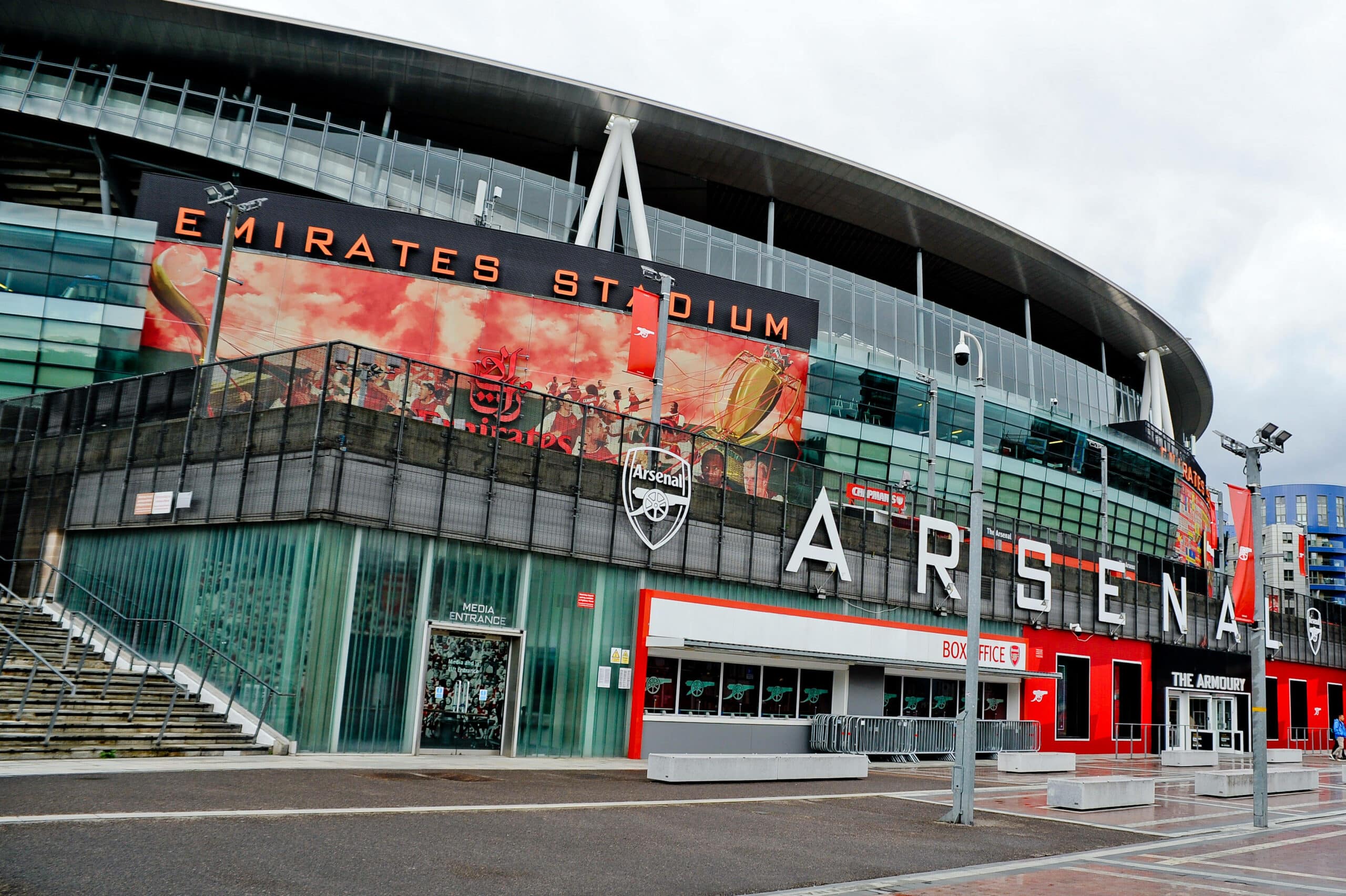
Arsenal executed a three-year plan to move from three to eight WSL matches at the 60,000-seat Emirates. The outcome:
- 60,160 vs Manchester United in February—a new WSL record
- Cumulative WSL and Championship crowds surpassing one million for the second straight year, with Arsenal providing four of the league’s top-five gates
Those numbers dwarf the FA’s original 6,000-per-game target, signalling a commercial paradigm shift.
Revenue and Sponsorship
Match-day income tripled year-on-year, enabling a seven-figure upgrade to the women’s analytics department. Shirt sponsors requested equal splash-page billing with the men’s side, citing higher engagement on Instagram Reels featuring Beth Mead than parallel posts with Bukayo Saka.
Mid-season, some fans joked that chasing resale tickets felt like spinning Fishin Frenzy free spins —all chance, no certainty—while strategists inside Arsenal described the demand curve as “non-linear and still climbing.”
Broadcast Multiplier
Sky’s “Friday Night Lights” slot averaged 452,000 viewers—up 29 %—for Arsenal fixtures, double the network’s WSL mean. Rights renegotiation now includes separate packaging for women’s games, a landmark first in English football.
Ripple Effects Across the League
Infrastructure Arms Race
Arsenal’s model has nudged rivals into action. Most seismic is Everton’s decision to repurpose Goodison Park exclusively for their women’s team, the first such move in British football. Chelsea responded by announcing five Stamford Bridge dates for 2025/26, while Manchester City accelerated plans to expand their Academy Stadium to 10,000 seats.
Fan Ecology and Travel Culture
Arsenal supporters organised subsidised coaches to Lisbon for the Champions League final, selling out 15 buses in four hours. These organised “away-day flotillas” mirror the phenomenon of anglers chasing the best fishing slots on a riverbank: space is finite, community word-of-mouth decisive.
Media Narrative
The Guardian’s weekly WSL talking-points column logged a 54 % spike in pageviews on Arsenal match weeks, while BBC Sport’s women’s landing page attributed a third of its push-notification click-throughs to Gunners headlines.
National-Team Synergy and Youth Development
England Core vs. Spanish Flair
Sarina Wiegman now fields a Lionesses XI featuring five Arsenal starters—Williamson, Mead, Russo, Cooney-Cross (naturalised), and Lotte Wubben-Moy—promoting system continuity between club and country. FA analysts note a 9 % uptick in England’s pass-completion rate when that club block begins.
Meanwhile, Caldentey’s quantum leap has created a La Liga-WSL talent bridge, encouraging Spanish youth internationals to consider England earlier.
Academy Investment
Arsenal’s revamped Hale End Women hub unveiled a data-rich “train how you play” curriculum with L-band GPS units and VR decision-making drills. Under-18 midfielder Katie Reid now passes through five senior sessions per fortnight, a pathway that would have been unimaginable five years ago.
Expert Voices
- Dr Carrie Dunn, sociologist: “Arsenal have normalised big-stadium women’s football. That expectation will outlast any single trophy.”
- Tim Stillman, journalist: “Slegers’ double-pivot gives Arsenal a platform to out-think continental heavyweights—expect clubs across Europe to copy-paste elements next season.”
- Kelly Smith, former Gunner: “The confidence I see in academy kids mirrors the swagger of the men’s Invincibles era.”
Personal Verdict and 2025/26 Outlook
Arsenal’s 2024/25 isn’t merely a story of points won; it’s a multifaceted case study in ecosystem design. By uniting elite performance, savvy marketing and architectural ambition, the club has pulled the entire WSL into a higher gravitational field.
Two unresolved questions will shape the sequel:
- Can they convert dominance into a league title? Narrow misses strengthen resolve but also add psychological weight.
- Will rivals like Chelsea and Manchester City match Arsenal’s stadium strategy or pivot toward boutique-ground intimacy?
Either way, the landscape has irrevocably shifted. Where once women’s fixtures were pencilled into spare calendar slots, they now command prime-time real estate and record-shattering crowds. Arsenal lit the fuse; the rest of England must decide how brightly they wish to burn.

