
Manchester City Verdict Raises Questions Far Beyond Football
Manchester City’s financial case has always stretched beyond football. The consequences now reach into politics, international investment, Manchester’s regeneration and the relationship between Britain and the United Arab Emirates.
According to an extensive report from The Athletic, the verdict against City has placed the club’s ownership and its relationship with Abu Dhabi under unprecedented scrutiny. Manchester City continue to deny wrongdoing and have appealed the decision.
The story begins with words spoken during the formative years of Sheikh Mansour’s ownership. Manchester City chairman Khaldoon Al Mubarak once explained the values he wanted the project to represent.
“There is almost a personification of the club with the values we hold as Abu Dhabi, as Sheikh Mansour,” Al Mubarak told The Guardian.
“These are loyalty, commitment, discipline, long-term thinking, respect, appreciation of history… We are acknowledging that how we are handling this project is telling a lot to the world about how we are.”
He continued: “This is showing the world the true essence of who Abu Dhabi is and what Abu Dhabi is about.”
Those comments carry renewed significance following the judgement against Manchester City.
City’s ownership structure has always been carefully defined. Sheikh Mansour is the majority shareholder through Newton Investment and Development, which he privately owns. Legally, that distinction matters.
Yet Manchester City and Abu Dhabi have developed extensive connections during the ownership era.
Etihad sponsors the club’s shirt, stadium and academy campus. Al Mubarak, meanwhile, occupies several significant positions within Abu Dhabi’s economic and political infrastructure, including his role as chief executive of Mubadala.
Other Manchester City commercial relationships have involved companies and organisations associated with Abu Dhabi, including Etisalat, Experience Abu Dhabi and Aldar Properties.
Success allowed those relationships to become associated with one of football’s great modern sporting projects. Manchester City collected trophies, attracted world-class footballers and established themselves among the most powerful clubs in Europe.
The verdict creates a very different conversation.
Manchester City Case Reaches Westminster
The political sensitivity became particularly apparent through comments made by UK Prime Minister Andy Burnham, whose previous role as mayor of Greater Manchester gave him extensive experience of the transformation taking place across the city.
Asked about the possibility of Manchester City’s owners eventually leaving English football, Burnham told the BBC:
“I would be really concerned to lose them,”
“They’ve been such a huge partner in the building of modern Manchester and obviously the building of Manchester City into the global force that it is.
“I do actually thank the City Football Group and the wider ownership for the money that they didn’t just put into the Etihad (City’s home stadium) and the campus around it but also into the city.”
Those remarks inevitably generated attention.
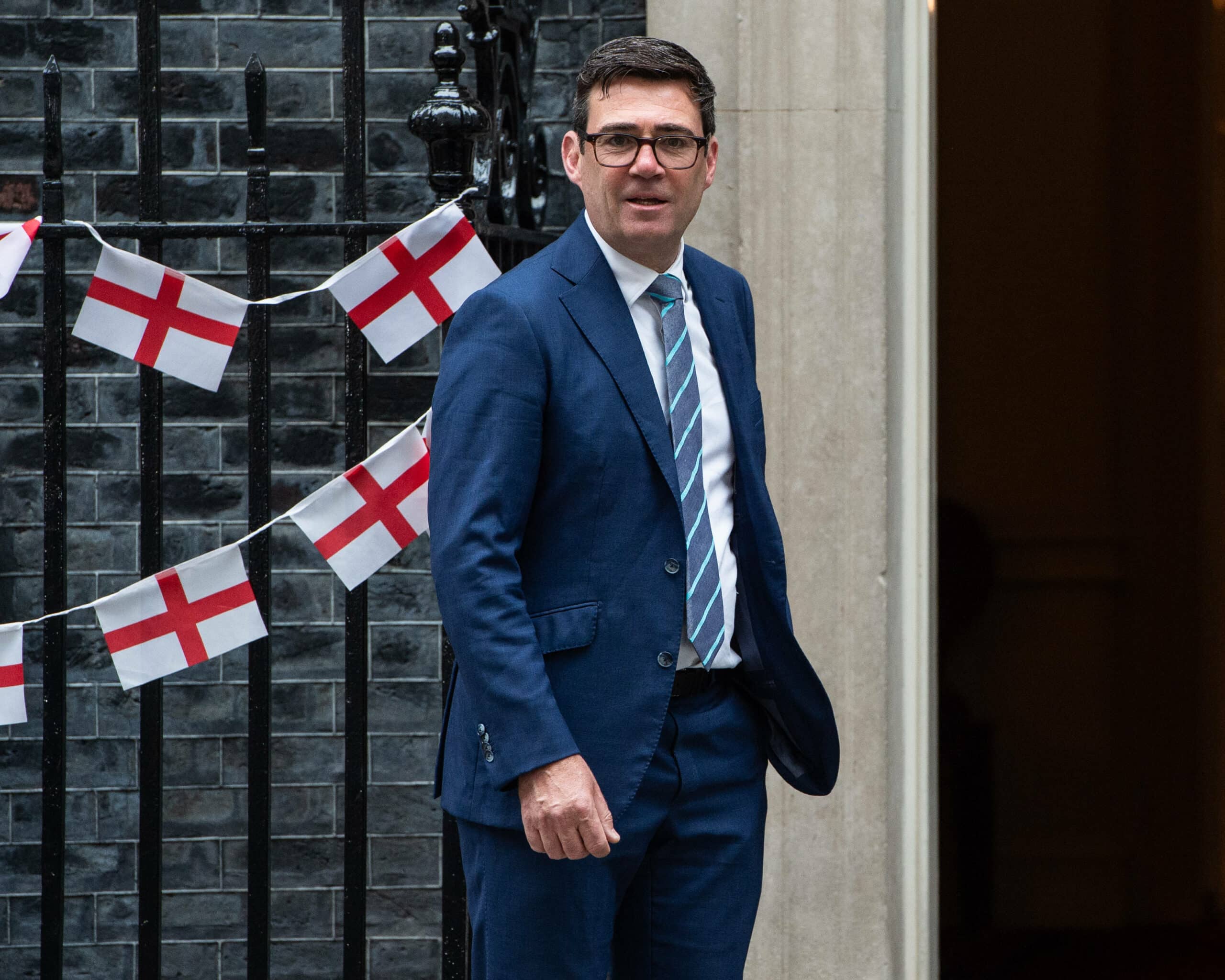
Burnham was attempting to recognise the economic investment made in Manchester, a city he represented as mayor between 2017 and 2026. Yet the timing ensured his intervention became part of a much larger debate about whether economic considerations could influence the treatment of a football club found to have breached competition rules.
The government subsequently clarified his position.
A spokesperson initially said:
“As the Prime Minister made clear, the initial judgement is serious and there can’t be any suggestion that anyone is above the rules… If wrongdoing is established, those responsible should face the appropriate consequences.”
That wording attracted criticism because wrongdoing had already been established by the Premier League process described in The Athletic’s report.
A revised statement followed:
“Wherever wrongdoing is established, those responsible should face the appropriate consequences.”
The episode demonstrates how difficult this territory has become.
Manchester City are a football club, an enormous commercial organisation and part of a wider investment story that has transformed areas of Manchester. Their ownership also sits within an international relationship carrying major economic importance for Britain.
That combination makes the situation unusually complicated for politicians.
The Athletic reports that bilateral trade between the UK and UAE exceeds £25billion annually. The UAE-UK Sovereign Investment Partnership, launched in 2021 with an initial £10bn five-year target, has reportedly committed almost £30bn through more than 50 direct investments.
The partnership claims those investments have supported 48,000 UK jobs, with considerably more expected by 2030.
Around 250,000 British nationals are also estimated to live in the UAE.
Football therefore sits inside a relationship involving trade, security, diplomacy and investment. That does not diminish the importance of football’s rules. It explains why the consequences are being watched far beyond Premier League boardrooms.
Abu Dhabi Links Put Politics Under Scrutiny
Al Mubarak is central to understanding why the Manchester City case has developed such political significance.
His responsibilities extend far beyond football. He leads Mubadala, chairs Abu Dhabi Commercial Bank and serves on the board of the Abu Dhabi National Oil Company. He also chairs the UAE’s Executive Affairs Authority.
His diplomatic importance has also been visible.
When former Prime Minister Keir Starmer travelled to Abu Dhabi earlier this year for discussions surrounding the Strait of Hormuz, Al Mubarak greeted him on arrival. He also serves as the UAE’s Presidential Special Envoy to China.
Christopher M Davidson, author of Abu Dhabi: Oil & Beyond, described Al Mubarak’s standing in striking terms:
“He has been the effective prime minister of Abu Dhabi for many years,”
“He has a strong and commanding position of big chunks of Abu Dhabi’s state-backed economy. He is the economics guru, or right-hand man of MBZ, the ruler, with a relationship with him that goes back many decades. It is hard to identify a more trusted and closer lieutenant not just to Sheikh Mansour, but to the ruler himself.”
This helps explain why attempts to separate Manchester City completely from the wider Abu Dhabi story have always faced scepticism among supporters and observers.
The links are visible commercially, institutionally and personally.
Manchester itself provides another layer.
During the years of Abu Dhabi investment, previously neglected parts of east Manchester underwent considerable redevelopment. Supporters of the investment argue that capital helped regenerate areas that desperately needed economic attention.
Critics have questioned whether Manchester became too dependent upon Abu Dhabi money and whether some agreements produced sufficiently strong returns for the public.
A collaboration agreement between Manchester City Council and Sheikh Mansour’s Abu Dhabi United Group, signed in 2015, reportedly provided a right of first refusal over certain council-owned land.
Academics have previously questioned aspects of the arrangement. Manchester City Council has disputed criticism, maintaining that land was independently valued and that agreements represented the best available option during a period of limited market interest.
Jonathan Reynolds, the UK secretary of state for business, innovation, science and trade, highlighted the transformation of New Islington when speaking to The Athletic:
“If you look at New Islington (in Manchester), there was a social-housing estate that people abandoned properties on; they did not want to live there. Now it’s one of the most sought-after places, with loads of families and young professionals and all the benefits for an economy that come from people living in the city. It’s that investment that’s turned (those places) desirable. They weren’t desirable before then.”
That regeneration cannot reasonably be ignored.
Neither can the questions accompanying it.
Economic growth and gentrification frequently arrive together. Rising investment can produce employment, housing and infrastructure while simultaneously increasing rents and altering communities.
Davidson believes Abu Dhabi understood the wider political opportunity provided by investment in northern England.
“Abu Dhabi was there to help that,”
“There was a soft-power element to demonstrate to the UK more broadly that the UAE’s investments are necessary and positive. The Gulf states had a finger on the pulse of domestic UK politics. They saw a way of going further than the soccer club itself and actually becoming an integral part of the UK’s northern economics.”
Manchester’s growth has subsequently become an important political story.
Burnham has promoted what has been described as “Manchesterism”, using the city’s economic development as evidence of what greater regional investment and political autonomy can achieve.
He told the Labour Party conference:
“I intend to take what I did in Manchester, our plan for good growth, and drive it from the very centre of government into every postcode in Britain.”
The Manchester City verdict now complicates that narrative.
Any suggestion that political leaders are excessively sympathetic towards City’s ownership will inevitably invite questions about whether economic relationships are affecting judgement.
Those questions become even more important when the integrity of the Premier League is involved.
Premier League Independence Faces Major Test
For football supporters, this may ultimately be the most important issue.
Whatever Manchester City’s ownership has contributed economically, Premier League rules must operate independently from diplomatic or commercial considerations.
Football’s credibility depends upon clubs competing within the same regulatory framework.
The Athletic highlights historical reasons why supporters may worry about political involvement. Documents previously obtained by the publication revealed government discussions surrounding the Saudi-backed takeover of Newcastle United in 2021.
Those papers showed that officials considered failure of that takeover a potential risk to Britain’s relationship with Saudi Arabia. The Premier League has maintained that government pressure did not determine the eventual outcome.
That history inevitably informs perceptions surrounding Manchester City.
The Premier League itself represents significant British soft power. Its global audience, commercial reach and cultural importance are enormous. Protecting confidence in the competition should therefore be viewed as an economic and diplomatic interest in its own right.
A league whose regulations appear vulnerable to political influence would rapidly lose credibility.
Manchester City continue to appeal, and due process remains essential. Any sanction must be determined according to the relevant regulations and evidence, rather than supporter anger or political calculation.
There are further complications.
The Athletic reports that Tax Policy Associates has examined information emerging from the case and suggested that offshore payments associated with former City manager Roberto Mancini could potentially have resulted in unpaid UK tax.
Its report stated:
“The consequences could include a much larger tax bill and a criminal investigation… The commission’s finding that Manchester City knowingly filed false accounts suggests that Companies Act offences may have been committed,”
These are extremely serious matters and any separate legal or tax questions would need to be addressed through the appropriate authorities.
Etihad Airways has also threatened legal action against the Premier League after the independent commission described sponsorship arrangements as “sham” deals. Etihad was not named in the report but remains Manchester City’s most prominent sponsor.
The scale of the confrontation is therefore growing.
It potentially involves Manchester City, the Premier League, sponsors, government interests, tax questions and the broader relationship between the UK and UAE.
Each institution must be allowed to perform its own role.
Football authorities should enforce football regulations. Government should protect the national interest without interfering with independent sporting processes. Courts and tax authorities should address matters falling within their jurisdictions.
Confusing those responsibilities would damage confidence in every institution involved.
City Ownership Faces Uncertain Future
Manchester City chairman Al Mubarak has previously been emphatic about the ownership’s intentions.
During his annual club interview in June, he said there is “no intention to sell” City.
“Manchester City and this group within the football world is a pinnacle and these sorts of jewels you don’t sell,”
That position appears clear.
The verdict has nevertheless prompted speculation about whether Abu Dhabi’s relationship with Manchester City could eventually change.
For almost two decades, City have been a remarkable sporting vehicle for their owners. They have won major trophies, built an elite infrastructure and established a global football network through City Football Group.
Manchester City became synonymous with excellence on the pitch.
Pep Guardiola’s teams established extraordinary standards. Players including Kevin De Bruyne, Sergio Aguero, David Silva, Vincent Kompany and numerous others produced football that deserves recognition on its sporting merits.
The current controversy does not require supporters to pretend those matches never happened or those footballers lacked brilliance.
It requires football to determine whether the rules governing that competition were respected.
That distinction matters.
Davidson believes the reputational consequences could eventually encourage the ownership to reconsider its position.
“Once there’s some time to digest this, my feeling would be that they would extricate themselves,”
“I think primarily it would be seen from a political and cultural aspect. The ruling family of Abu Dhabi would feel that they had been embarrassed and disgraced by this ruling, and the best way of moving forward would be to sell now to cut the losses, as it were, rather than allow this to be a festering, lingering problem where the ownership of their club would be forever tainted in England.
“I can’t see any scenario where they would continue.”
Whether events eventually move in that direction remains uncertain.
City’s stated position is very different, and their appeal could shape everything that follows.
The bigger lesson already appears clear. Modern football ownership can no longer be considered solely through the traditional relationship between a club, its supporters and its shareholders.
Manchester City sit at the intersection of sport, international investment, urban regeneration, diplomacy and politics.
That complexity cannot become an excuse for avoiding accountability.
The Premier League now faces one of the greatest tests of its regulatory authority. Manchester City face perhaps the most consequential battle of the Sheikh Mansour era. The British government must simultaneously navigate an important international relationship without creating any impression that financial power grants protection from sporting regulations.
Al Mubarak’s comments from those early years now possess an uncomfortable relevance.
Manchester City were intended to tell the world something about Abu Dhabi.
Nearly two decades later, the way City, the Premier League and political leaders respond to this extraordinary case will tell the world something equally important about English football.
Our View – EPL Index Analysis
From the perspective of a shocked football supporter, this has moved far beyond arguments about trophies, rivalries and league tables.
Supporters need confidence that football’s rules mean something. Clubs can have wealthy owners. They can transform communities, build training grounds, create employment and attract some of the finest players in the world. None of those achievements should provide immunity from regulations.
That is why political comments surrounding Manchester City are uncomfortable.
The UK can value its economic relationship with the UAE while allowing the Premier League’s independent processes to proceed without interference. Those positions can coexist.
Manchester City also deserve their appeal. If the club believes the judgement is wrong, it has every right to challenge it through the established process. Supporters should want the final outcome to be robust enough to withstand that scrutiny.
What cannot happen is a punishment being softened because the ownership is economically important, nor should sanctions be exaggerated because rival supporters demand revenge.
Football needs a credible decision based upon evidence and regulations.
City’s achievements on the pitch were extraordinary. Guardiola’s football set standards that forced rivals to improve. That sporting history makes the situation even more significant.
If rules were systematically breached, meaningful consequences must follow. If findings are overturned on appeal, that must also be respected.
For every football supporter, regardless of club allegiance, the priority should be simple: one competition, one set of rules, applied without fear or favour.
Source: The Athletic

