
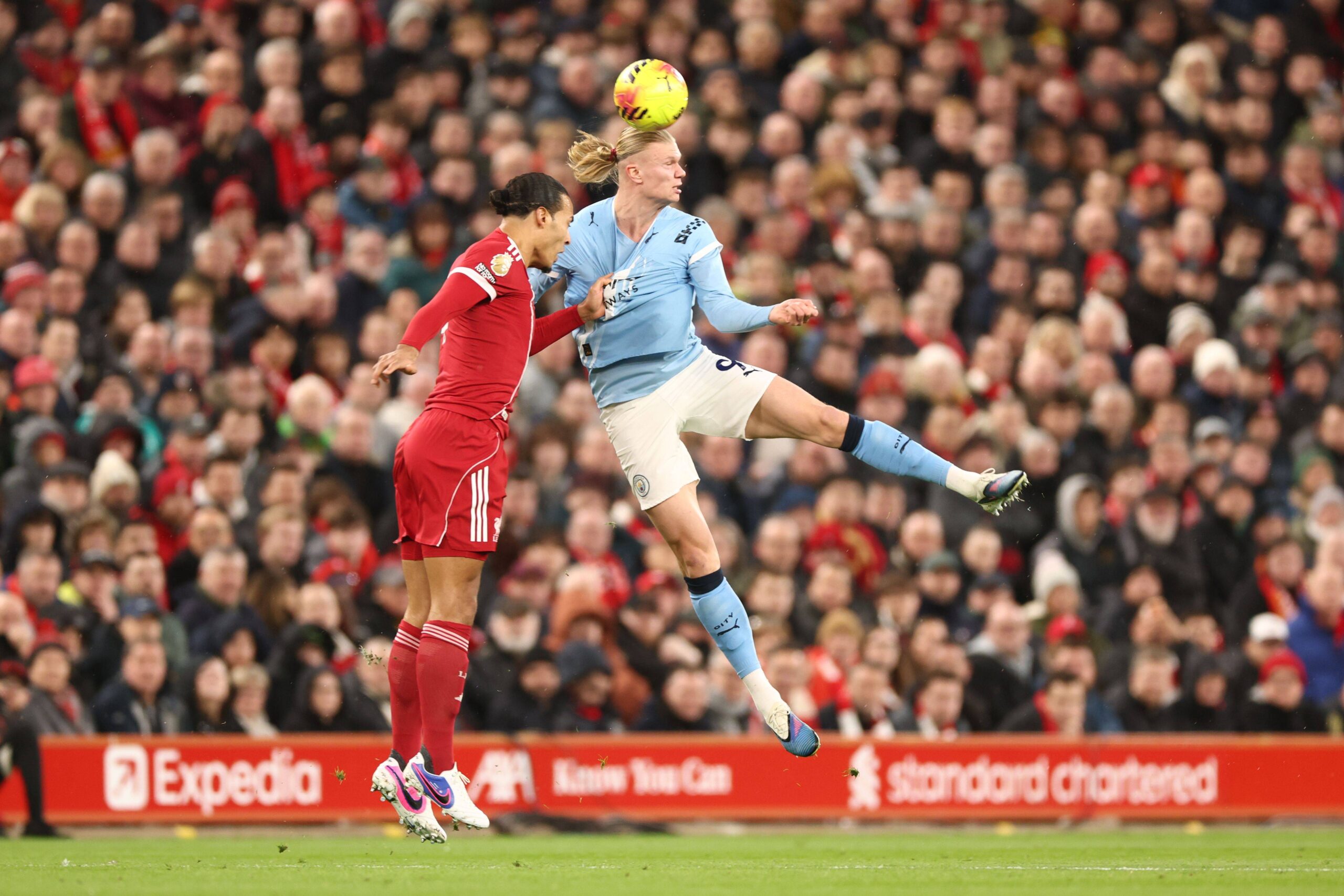
Erling Haaland calls for Manchester City unity as financial charges case heads to appeal
At moments of institutional strain, footballers are often asked to serve two roles at once. They must prepare for the next match, and they must stand as public symbols for a club trying to preserve its own sense of order. That was the task placed before Erling Haaland this week, as Manchester City attempt to absorb the consequences of a landmark guilty verdict over serious breaches of Premier League financial rules, while also turning their attention to a daunting trip to Anfield.
The verdict has left City confronting one of the most consequential episodes in modern English football governance. An independent commission found the club guilty on all charges connected to major financial rule breaches. City have responded by lodging an appeal, insisting the findings are flawed in substance and process. In the middle of that uncertainty, Haaland has tried to offer supporters a simpler message, one grounded less in legal argument than collective emotion.
As relayed in the original report, Haaland’s appeal to supporters was direct: “Stick together, enjoy the ride and smile,” is Erling Haaland’s message to Man City fans.

Financial charges cast long shadow over Manchester City
The findings of the independent commission were severe, both in scale and in implication. It concluded that between 2009/10 and 2017/18, City arranged what were described as “sham” contracts with several commercial partners, part of what the ruling characterised as a disguised funding scheme. The effect, according to the decision, was to inflate revenues by £830m. The commission further found that the club filed accounts which concealed the true state of its finances, significantly breached both Premier League and UEFA spending limits, and broke well over 100 Premier League regulations.
There was more. Three out of four allegations connected to failing to co-operate with the league were upheld, with one not proven. The commission also remarked on the drawn-out nature of the process, noting that the hearing had taken place between September and December 2024. That alone hints at the density of the case, its paperwork, and the degree to which it has reshaped the league’s relationship with one of its defining clubs.

City’s answer has been defiant. The club maintain they are “innocent” and argue the judgement is merely “opinion”. They say it contains “clear material errors, of law, principle and fact and is unsafe”. There is, in that language, a familiar legal strategy and a broader institutional instinct. City are not merely disputing the verdict, they are challenging the authority and reliability of the process that produced it.
Haaland frames Anfield test through solidarity
That wider battle now forms the backdrop to one of the Premier League’s great modern fixtures. Manchester City travel to Liverpool on Sunday, a game that in another week might have been discussed through pressing structures, transition control and the management of space between the lines. Those tactical questions still matter, of course. Yet this time they will be viewed through a haze of legal uncertainty and public debate.
Haaland, though, chose not to dwell on procedural details. His intervention was more human than forensic. “We have to stick together. We have to stay with each other, and we have to stay positive. No matter what happens in life, we always have to have a smile.
“So we have to stay positive, look ahead, and try to win football games and try to enjoy the situation and win the game.
“We have to stick together; we have to spread the love to each other. So yeah: stick together, and enjoy the ride and smile.”
There is an obvious practicality in that sentiment. Dressing rooms do not function well when they become annexes to legal teams. Elite football depends on narrowing the field of vision, on reducing noise, on preserving the rhythm of preparation. Haaland’s comments seemed designed to protect that space, to draw a line between the external drama and the internal necessity of performance.
He also spoke of his own emotional investment in the club and the city around it. “I care a lot about the city, I have to say. I care a lot about the fans because I’m a fan myself, and I feel with them as well.” For supporters facing months more uncertainty, that matters. Fans often ask not for complete answers, but for some visible sign that those on the pitch understand the mood in the stands.
Liverpool rivalry gains another layer before Anfield meeting
The timing sharpens everything. City’s matches with Liverpool have for years represented a contest of footballing ideologies as much as league positions, and although the personnel around the fixture have changed, the sense of occasion remains. Haaland himself acknowledged the emotional texture of this rivalry, recalling how he watched earlier iterations of the contest from afar and recognised the force with which the two clubs drove each other on.
“It’s always special to play against Liverpool. Especially with Pep and Klopp. I remember sitting in Salzburg and Dortmund and watching the games, how much they pushed each other. It’s always special games there.
“I won there, I drew there, I lost. So it’s always special, and every Premier League game is different, and every game against Liverpool is always special.”
That is neatly put. Anfield has often served as a stress test for title contenders and self-images alike. For City now, it offers something similar. The match will not resolve the legal case, nor will it quieten the debate around governance, finance and competitive balance. It can, however, reveal how intact the team remains under pressure.
Appeal process may extend Manchester City uncertainty into 2027
That pressure may not lift soon. Although fresh appeal rules are intended to accelerate the disciplinary process, there appears to be significant room for argument over whether they apply here. City were charged in 2023, and the hearing took place in 2024, before the newer fast-tracked appeal framework entered the handbook for this season. If City’s lawyers contest the application of those rules, the appeal could stretch deep into 2027.
That possibility matters far beyond administrative scheduling. Football institutions live by timing. Sanctions delivered promptly shape seasons, squads and reputations. Sanctions delayed create a different landscape, one in which uncertainty becomes its own form of punishment, and in which each result, each transfer and each public statement is interpreted through an unresolved case.
For now, Manchester City remain suspended between verdict and appeal, between accusation and defence, between public judgement and legal challenge. Haaland’s message does not attempt to untangle that knot. It does something narrower, and perhaps more useful. It asks supporters to endure the ambiguity together, and to keep sight of the one element football always drags back into focus, the next game.

