Sir Jim Ratcliffe’s Influence on Football: A Glimpse into the Future of Manchester United?
From Nice’s Heart to Manchester’s Soul
The tale begins in the shimmering light of France’s oldest football competition in May 2022. As Nice met with their first major cup final in 25 years, the euphoria was short-lived; they succumbed to third-tier Le Puy Foot 43 Auvergne the following January.
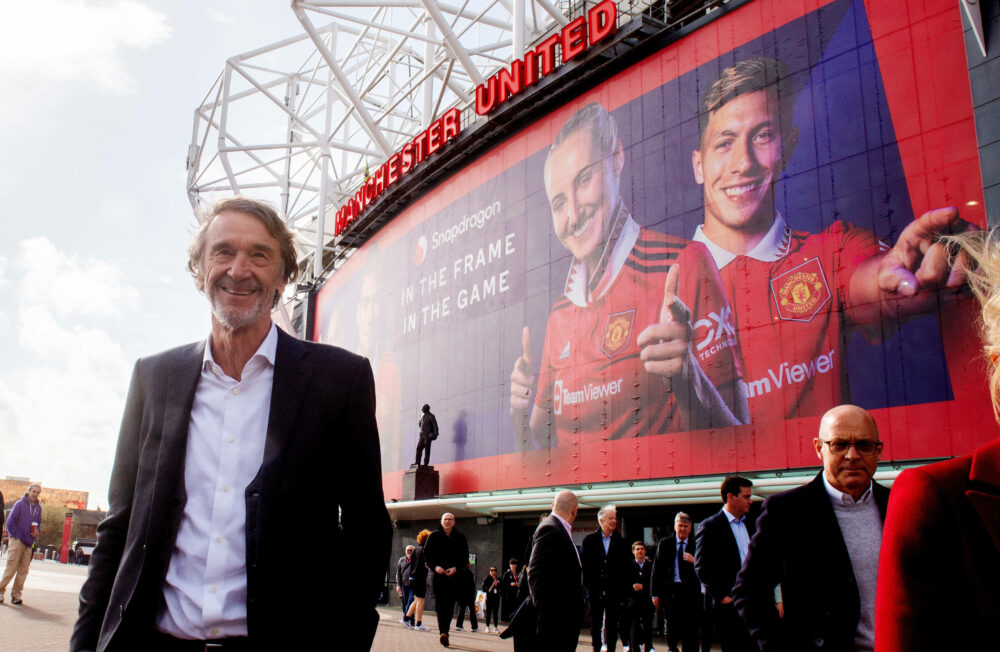
But this story isn’t just about Nice. It’s about a man local to Monaco, Sir Jim Ratcliffe, who after buying Nice, now hovers close to holding a significant 25% stake in his childhood favourite, Manchester United.
The Ratcliffe Effect on Nice
While Ratcliffe’s share in Manchester United might be seen as a minority, the influence it carries, especially over football operations, could be substantial. Reflecting on the mark made by Britain’s second wealthiest individual at Nice, one wonders what this could spell for the Red Devils.
Bob Ratcliffe, Sir Jim’s sibling and then-CEO of Nice in 2020, quipped to The Guardian about INEOS’s knack for acquisitions, emphasizing the value of walking away to secure the best deal.
Indeed, since INEOS’s takeover in 2019, the firm has splurged an impressive £113m on deals, a figure surpassed only by the likes of Paris Saint-Germain and Marseille. Such expenditure marked a sharp contrast from Nice’s £45m transfer market profit in the previous half-decade.
A Vision of Growth and Development
Under new ownership, there was also a £13.5m punt on a state-of-the-art training facility in 2020. Manchester United fans, anxious over Old Trafford’s decline under the Glazers, might wonder if similar investments lie ahead.
Ratcliffe, however, has been somewhat guarded about potential financial injections into United. With a tightening chemical economy and debts accumulated by pharmaceutical behemoth INEOS, it remains to be seen how deeply he might delve into his pockets.
Drawing from his experiences, including some self-admitted “silly mistakes” with Swiss football club Lausanne, Ratcliffe has been a fast learner. Under his stewardship, Nice, once known for spotting raw talent, began leaning towards more renowned footballers.
Strategy Shifts and Future Insights
A poignant reflection came from Nice’s captain, Dante, who observed the team’s dynamic change, pointing out the challenges of a major squad overhaul. That summer, however, the club’s transfer policy shifted, moving away from big Premier League names.
The appointment of young Francesco Farioli as the manager was perhaps an emblematic nod to Nice’s refreshed youthful outlook. This sentiment echoed during Ratcliffe’s visit to Old Trafford, where he highlighted Manchester United’s arguably imprudent £60m purchase of the then 30-year-old Casemiro.
If Ratcliffe does control United’s purse strings, fans might anticipate a more judicious recruitment strategy.
The Delicate Balancing Act of Leadership
Interestingly, despite the sea of changes, Ratcliffe retained key personnel at Nice. This balanced approach, hinting at a possible strategy for Manchester United, might see some familiar faces staying put. Yet, Ratcliffe’s ultimate dream remains – a complete takeover of the English giants. His decisive actions at Nice, from audits to personnel changes, reveal a man unafraid to wield his power when needed.
Erik ten Hag, potentially wise, has stayed away from these boardroom battles. As history has shown, Ratcliffe has typically allowed his managers space, as endorsed by Patrick Vieira, Nice’s former coach. He described Ratcliffe as a hands-off owner, valuing a manager’s autonomy.
In closing, while Vieira’s tenure at Nice ended 18 months post-Ratcliffe’s takeover, he harbours no bitterness. Ratcliffe’s high ambitions are clear, but so is his trust in those he employs.

